Filters

Attenuation Crates And Soakaway Systems

1 product

Showing 1 - 1 of 1 product

Showing 1 - 1 of 1 product
View
FREE Delivery*
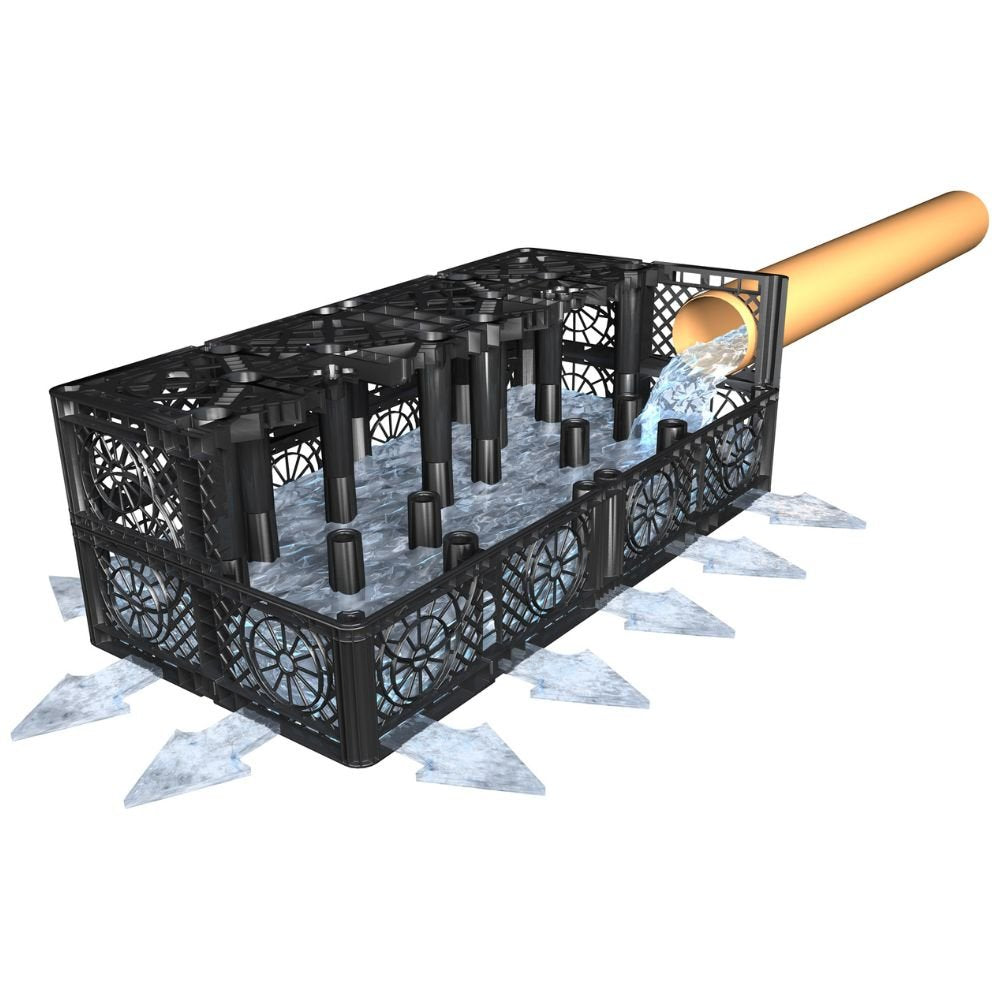
Rain Bloc Stormwater Attenuation & Soakaway Crates (300 Litre)Rain Bloc Stormwater Attenuation & Soakaway Crates (300 Litre)
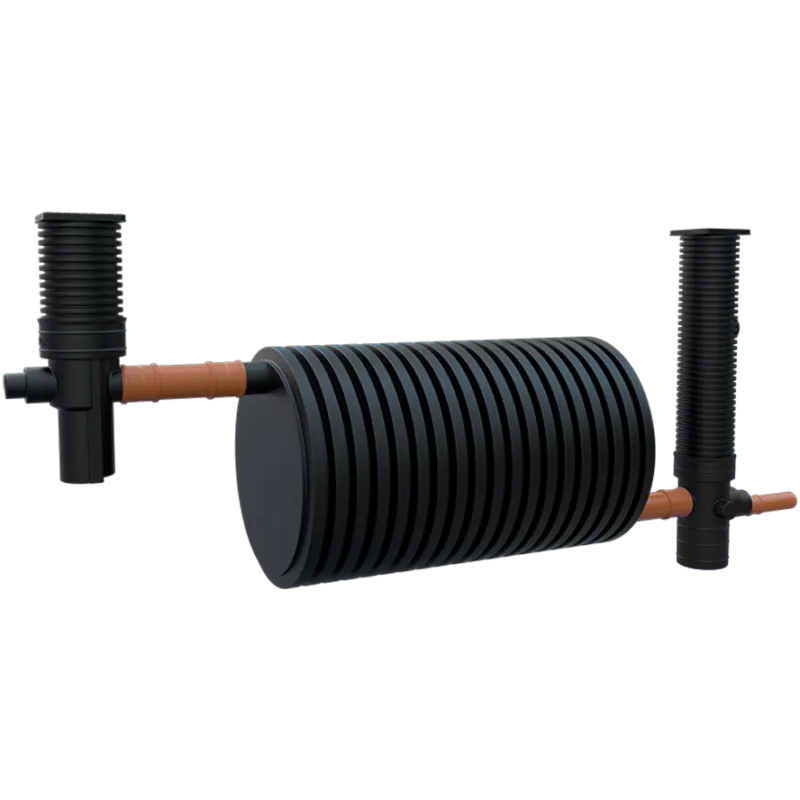
An attenuation tank is a structure that temporarily stores excess rainwater during heavy storms and releases it gradually into drainage systems or natural water bodies. This process helps prevent flooding by managing the peak flow of stormwater and avoiding overwhelming downstream infrastructure.
Sizing is based on several factors, including: Catchment Area: The total area (roofs, driveways, etc.) draining into the tank. Rainfall Data: Local annual rainfall and intensity for specific storm events (e.g., 1 in 100-year storm). Impermeable Surfaces: Percentage of area that doesn't absorb water (hard surfaces). Discharge Rate: The maximum allowable release rate to prevent downstream flooding (often greenfield runoff rate). Soil Infiltration: How quickly water soaks into the ground (for infiltration tanks/soakaways). Storm Return Period: The frequency of severe storms your system must handle (e.g., 1 in 30, 1 in 100 years). Location & Loading: Where the tank sits (under a driveway vs. green space) affects strength requirements. Drainage layout drawing: Not all attenuation tanks will be connected to local sewers, with some using drainage fields, which means a drainage layout drawing will have to be composed. This details how the water is processed out of the tank out into the local environment safely.
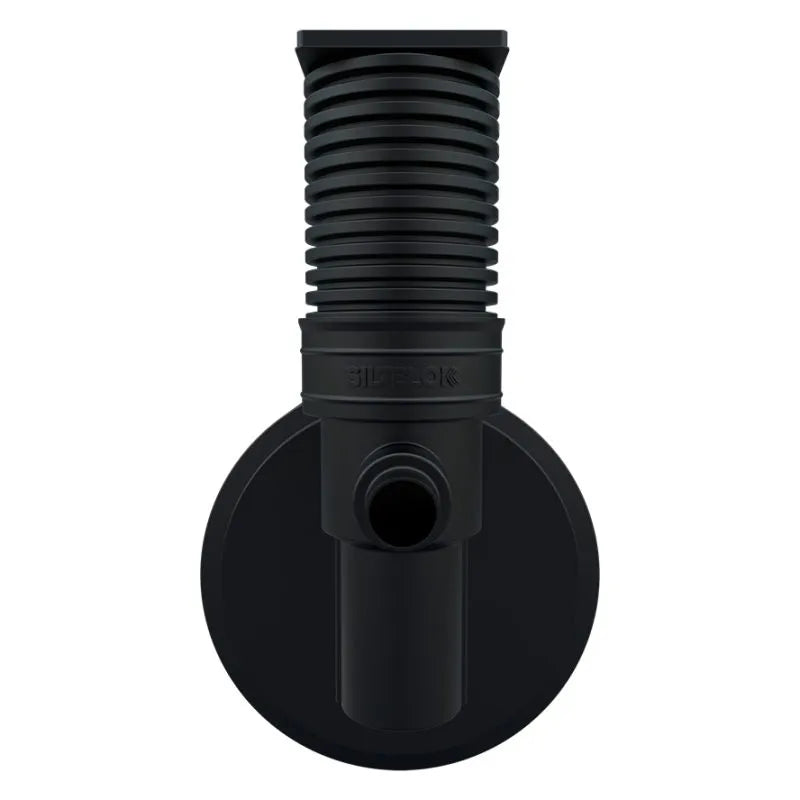
Yes, you need a flow control unit (FCU) with an attenuation tank. Without it, the tank just becomes a holding pond and doesn't prevent downstream flooding. The flow control regulates the slow release of water to match the capacity of existing pipes, preventing overwhelming the system.
Installing an attenuation/soakaway tank involves excavating a pit, preparing a stable gravel base, lining it with geotextile/geomembrane, assembling and placing modular crates, connecting pipes and vents, fully wrapping and sealing the structure with membrane, and then backfilling with gravel and soil.
Attenuation tanks should be installed by specialist drainage contractors, civil engineering firms, or companies providing full-service water management solutions or groundworks contractors.
While installation is possible with basic excavation skills, professional design is crucial for regulatory compliance and effectiveness.
They can be installed in a variety of settings, including residential, commercial, and industrial properties. They are located underground, for example, beneath car parks, access roads and in soft landscaping to save valuable surface space.
Regular checks are essential for longevity. Key maintenance tasks include Annual inspections to check for blockages in pipes and silt traps. Clearing built-up sediment or silt, typically every 1-2 years. Checking the integrity of the liners and ensuring the flow control devices are working correctly. To maintain an attenuation tank, perform regular visual checks, clear debris and silt from inlets/outlets/traps (especially after heavy storms), ensure flow controls work, and schedule periodic professional jetting/camera inspections, as neglect leads to blockages, reduced capacity, and potential flooding, even using specialized cleaning systems for complex tank layouts.
Choose a Soakaway if you have permeable soil and space for natural ground infiltration; it's simpler and often cheaper but needs good soil. Choose an Attenuation tank if soil is poor (like clay), space is limited, or you need controlled, slow release into sewers/watercourses for large volumes, as it stores water temporarily before releasing it, preventing downstream flooding. Both manage rainwater but differ in mechanism: soakaways soak into ground; tanks store and release slowly.
A French drain channels water away from an area using a gravel-filled trench and perforated pipe, actively redirecting it elsewhere (like a soakaway or storm drain), while a soakaway stores water in an underground pit (often crates or gravel) to disperse it slowly into the surrounding soil. French drains are better for moving water off-site and soakaways for gradual percolation. Think of the French drain as a water conveyor belt, leading to the soakaway as the holding tank.
In the UK, the standard guideline from building regulations is that an attenuation tank or soakaway should be a minimum of 5 metres away from a house. This distance helps prevent water from affecting the soil near the building's foundations and causing structural issues.
A stormwater soakaway must be located at least 10 metres away from any watercourse. This regulation is a key requirement in the UK to prevent contamination and potential flood risk downstream. A stormwater soakaway must be at least 50 meters away from any well, spring, or other groundwater abstraction point used for drinking water supply.
The required depth depends on several site factors: Good Soil (Sand/Gravel): Allows for deeper soakaways as water drains quickly. Poor Soil (Clay): Limits depth and may require a larger or shallower system, as it holds water. Groundwater Table: Must be well below the base of the soakaway. Proximity to Structures: Deeper soakaways pose stability risks to nearby buildings. Regulations: Local authorities have specific rules (e.g., not draining to sewers, depth limits).
A groundwater table (or water table) is the upper surface of the underground area where soil and rock are fully saturated with water, acting as the boundary between the wet saturated zone below and the drier unsaturated zone above.
Stormwater crates come in various load-bearing capacities, typically ranging from 20 tonnes for light-duty applications to over 60 tonnes for heavy-duty areas. The specific load a crate can handle depends on its design, material, installation depth, and the type of backfill used.
Typically, attenuation crates made from high-quality materials can last over 50 years with proper maintenance.
No, planning permission is generally not required if you are installing a surface water soakaway within the grounds of your property. However, Building Control regulations do apply, and the installation must comply with Approved Document H of the Building Regulations 2010. It is a legal requirement for new construction projects to manage surface water on site, if possible, before discharging to a watercourse or sewer.
The geotextile membrane allows water to pass through into the surrounding soil while preventing soil particles and silt from entering and clogging the internal void of the crates.
Signs include pooling or standing water above the soakaway, soggy ground, overflow from connected drains/pipes, and dips in the ground caused by compacted soil.
Stormwater crates are generally considered superior to traditional gravel soakaways due to their increased efficiency, durability, and ease of installation. Crates are specifically engineered to provide a high-performance, long-term solution for managing surface water runoff.
Stormwater crates, also known as attenuation or soakaway crates, are typically made from durable, high strength recycled plastic materials, primarily polypropylene (PP) or high-density polyethylene (HDPE).
The amount of water a crate holds is based on its gross volume and its "void ratio": Gross Volume: The total physical space the crate occupies (Length x Width x Height). Void Ratio: The percentage of empty space within the crate's structure where water can be held. Crates have a high void ratio, typically 95% or more, meaning very little space is taken up by the plastic material itself. For example, a crate with a gross volume of 300 litres (0.3m³) and a 95% void ratio will hold a net volume of 285 litres of water.
SuDS drainage (Sustainable Drainage Systems) means managing rainwater using natural processes like infiltration, storage, and slow release, mimicking the water cycle to reduce flood risk, improve water quality, and provide green space benefits, instead of just piping it away. These systems use features like permeable paving, and basins to collect, soak, and filter rainwater, making developments more sustainable and resilient to heavy rain.